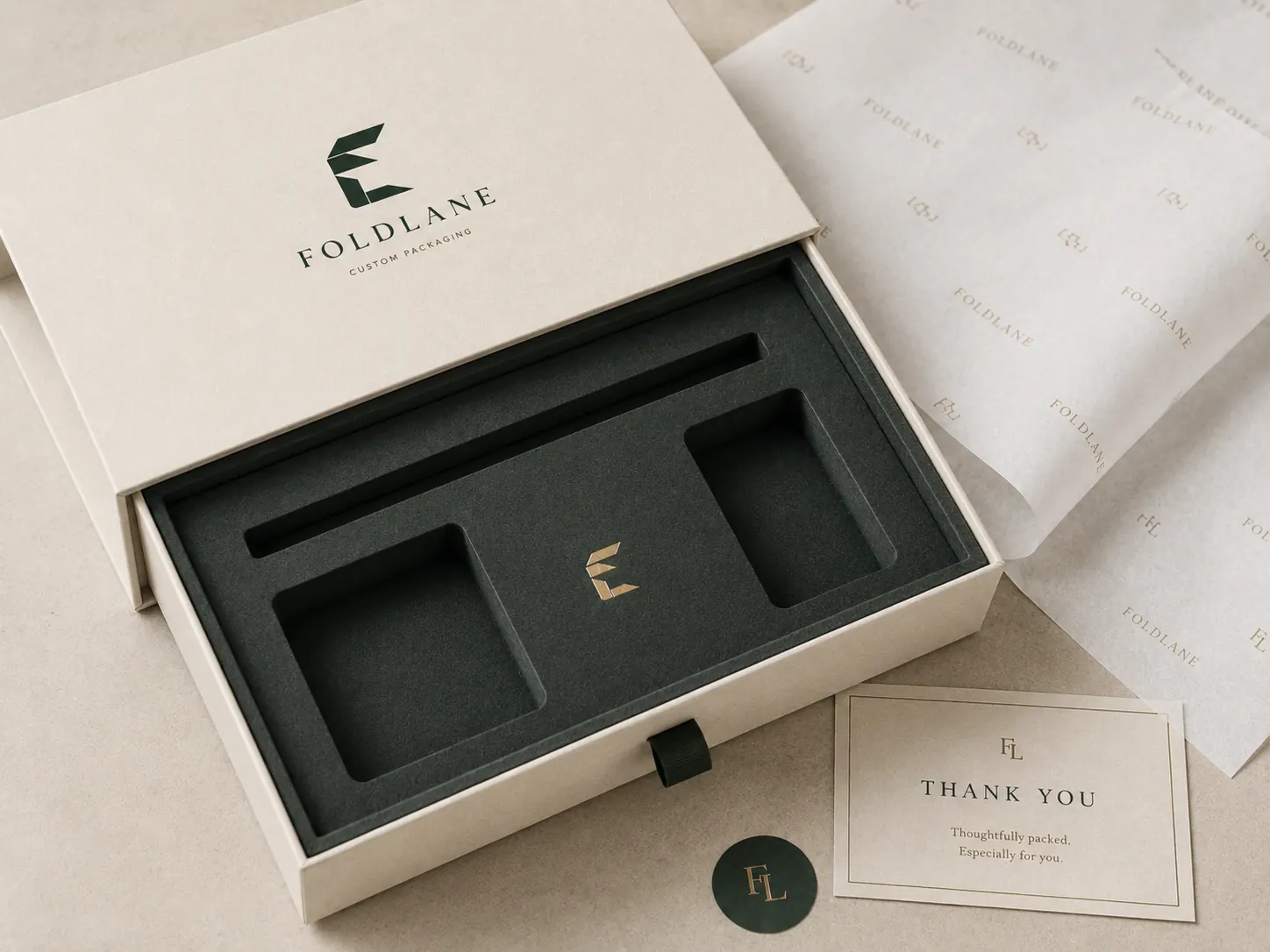
Quick answer
Use foam or wrapped foam when the item needs secure hold and a soft presentation. Use paperboard inserts when sustainability, print consistency or flat-pack efficiency matters. Use molded pulp or custom trays when the product has a defined shape and protection needs. Use velvet, suede-feel or fabric wrap when the jewelry must feel more ceremonial.
The insert should be decided with the box structure, not after it. A beautiful rigid box can feel weak if the ring, necklace or bracelet shifts during handling. Start with the product format, then confirm the insert material.
Common jewelry insert types
| Insert | Best for | Main caution |
|---|---|---|
| Foam insert | Rings, earrings, small pendants and sets that need tight hold. | Cut accuracy and surface covering affect the final look. |
| Paperboard insert | Lightweight jewelry, cards, hang tags and more recyclable systems. | Needs careful die-cut design to avoid weak holding points. |
| Velvet or fabric wrapped insert | Gift packaging and higher perceived value. | Color, lint, glue marks and edge wrapping must be checked in sample. |
| Molded tray | Sets with repeated shape, kits or protective layouts. | Tooling and MOQ can be less flexible than simple inserts. |
Fit and protection come before decoration
The insert should control three things: movement, contact and removal. Movement matters because small items can rotate or fall out of position. Contact matters because plated, polished or stone-set jewelry can be scratched by rough surfaces. Removal matters because the customer should be able to lift the product without pulling too hard or damaging the insert.
For necklaces, confirm chain management. For earrings, confirm hole position and backing clearance. For rings, check slot angle and whether the ring face is visible when the lid opens. For bracelets and watches, confirm curve, cushion height and whether the item touches the lid.
Match the insert to the brand feel
A minimal jewelry brand may prefer molded paperboard, clean slots and restrained printing. A gift-led brand may prefer a rigid box with fabric wrap and a pull ribbon. A retail display line may need a carton, card and pouch system rather than one heavy box. The insert is part of the system, not a hidden component.
If you are building a coordinated jewelry line, compare box, bag, pouch and collateral options in Packaging Systems before locking one insert style.
Sample checks before production
- Place the real product inside the sample and shake gently to test movement.
- Check whether plated surfaces touch rough board, glue, foam cuts or unfinished edges.
- Open and close the box repeatedly to confirm lid clearance.
- Photograph the open-box view to judge product angle and brand presentation.
- Confirm whether the insert can be packed efficiently by hand at your expected volume.
To request an insert recommendation, send product dimensions, weight, photos and any reference packaging through the custom project form.
Production note
This guide supports jewelry packaging production planning. Insert feasibility depends on product geometry, sample testing, material availability, artwork, target quantity and production review.
Need an insert layout?
Send jewelry dimensions, item photos, target quantity and reference direction. We aim to reply within 1 business day.